FRP Sandwich Panels
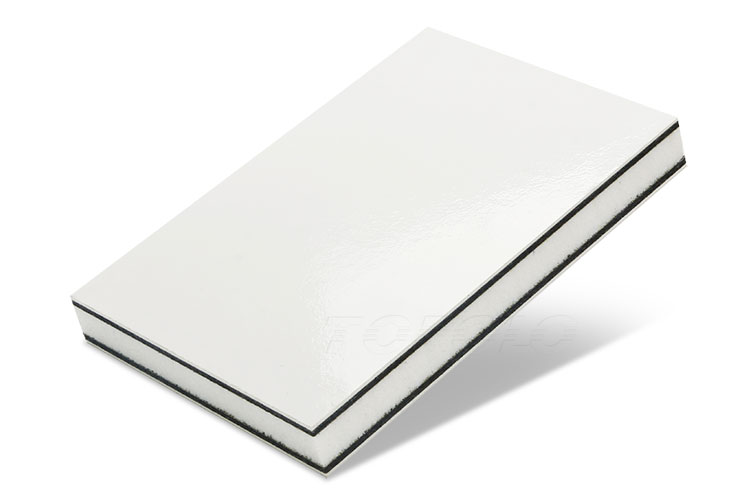
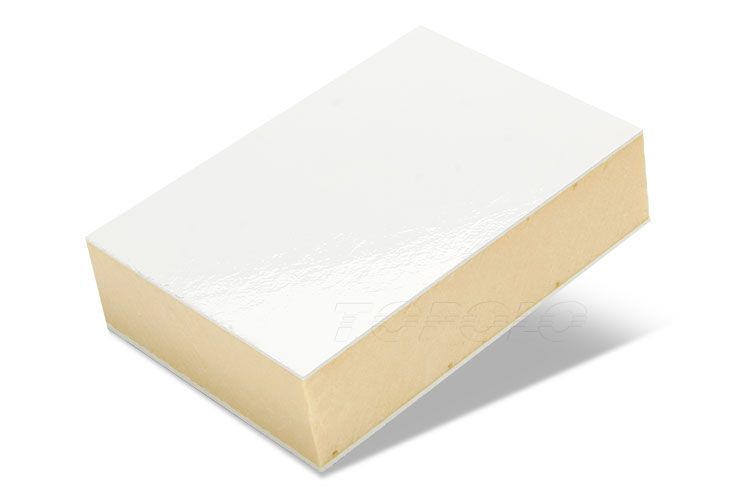
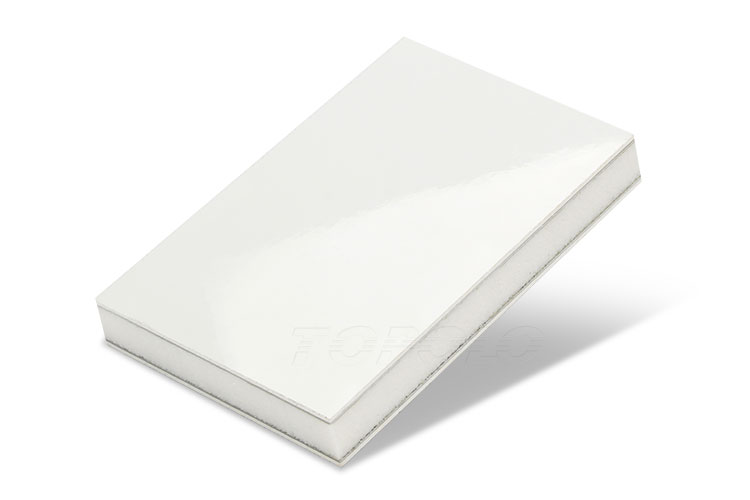
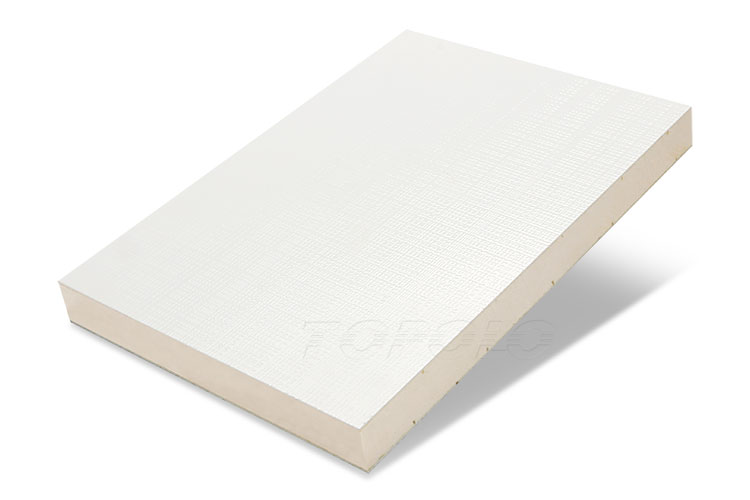
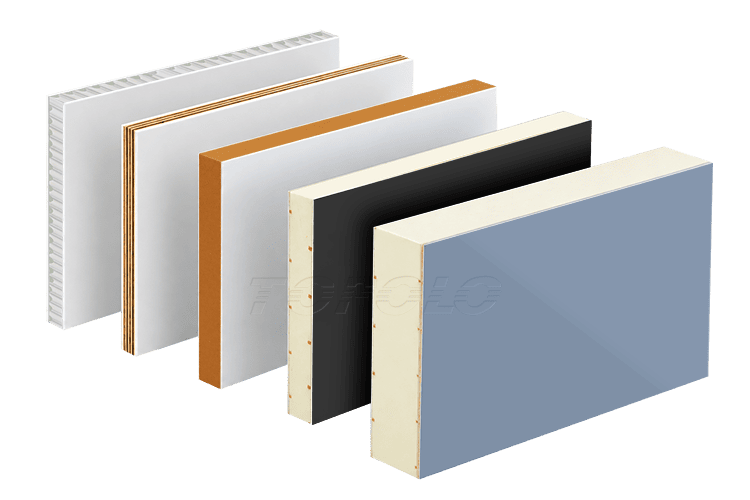
- Closed-cell Foam Core
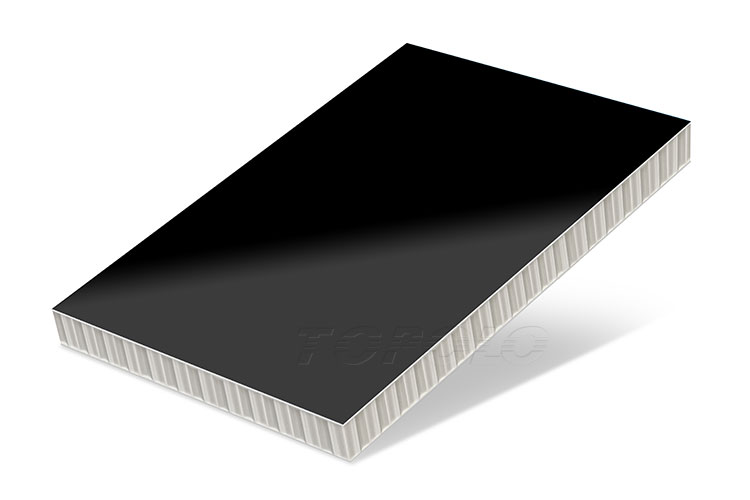
- Thermoplastic Honeycomb Core
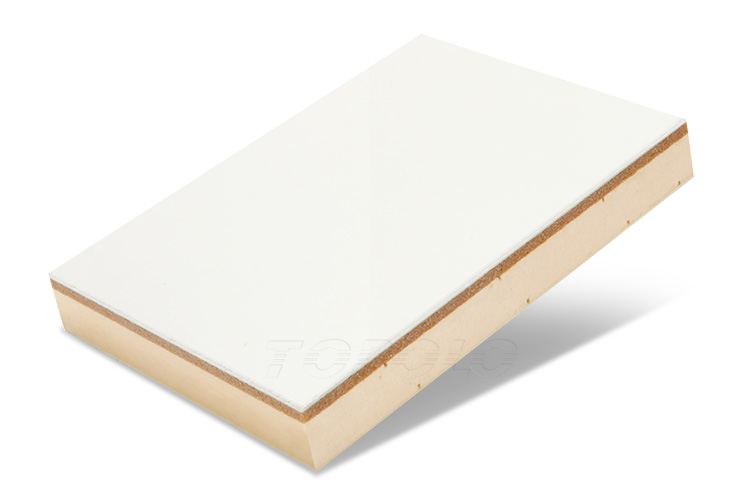
- Waterproof Plywood Core
FRP sandwich panels—also known as fiberglass composite sandwich panels—are structural panels composed of FRP (Fiber-Reinforced Plastic, or GRP) sheets serving as the outer skins, bonded to various types of core materials. They were developed to leverage the excellent corrosion resistance, weatherability, strength, and processability of FRP, offering a lightweight, durable, and easy-to-fabricate material solution that can replace certain traditional metal and wood panels in specific applications.


Advantages of Fiberglass Sandwich Panels
☑ Lightweight
The core materials of FRP sandwich panels typically consist of low-density foam or honeycomb structures, resulting in a low overall density.
☑ High Strength
High-rigidity FRP sheets provide excellent impact resistance; the material combines stiffness with toughness, enabling it to withstand physical impacts and stress.
☑ Waterproof
This is a key distinction between FRP sheets and wood-based panels. FRP is non-absorbent and chemically inert, so it does not suffer from the long-term issues—such as rot—commonly associated with wood materials.
Specifications
| Facing Materials | FRP (GRP) Sheets |
| Core Materials | XPS(Extruded Polystyrene) Foam PVC(Polyvinyl Chloride) Foam PU(Polyurethane) Foam PET(Polyethylene Terephthalate) Foam PP(polypropylene) Honeycomb Plywood |
| Lamination Methods | Adhesive bonding |
| Width | ≤ 3.2m |
| Length | ≤ 12m |
| Thickness | 10-150 mm |
| Surface Color | RAL Color Series |
| Surface Finish | Glossy, matte, embossed. |
Choose TOPOLO New Materials
TOPOLO customizes FRP (fiberglass reinforced plastic) sandwich panels to meet your project requirements. We offer a wide range of customizable specifications—including dimensions, thickness, weight, and surface finishes—and provide CNC machining services, all aimed at delivering high-quality products while reducing production costs. Our FRP sandwich panel production facility spans tens of thousands of square meters, with a daily production capacity exceeding 5,000 square meters. TOPOLO FRP composite panels are highly popular in the international market, with strong sales across Europe, South America, North America, the Middle East, Central Asia, Southeast Asia, and Africa.
Structure of FRP Sandwich Panels
Most traditional FRP sandwich panels feature a three-layer structure: “skin + core + skin.” The FRP skins and core material are bonded and laminated together to form a composite panel with specific structural strength and functionality. Common core materials include rigid foam, honeycomb structures, and plywood. Moving beyond the conventional three-layer design, TOPOLO flexibly designs and optimizes the internal structure of sandwich panels to meet specific application scenarios and performance requirements. Beyond simply increasing the number of core layers, the panels can incorporate embedded structural frameworks, reinforcements, or other functional components, and feature composite surface materials to satisfy diverse needs—such as load-bearing capacity, thermal insulation, impact resistance, and functional integration.

- XPS (extruded polystyrene), is made of polystyrene resin as raw material plus other auxiliary materials and polymers, while heating and injecting a catalyst, and then extruded to form a rigid foam plastic board. It has a very low Hygroscopicity (almost no water absorption), low thermal conductivity, and high compression resistance.

- PET foam is a kind of closed-cell thermoplastic structural polyester foam with certain shear and compressive strength. It provides excellent fatigue resistance, impact resistance, and deficient water absorption. It also has good thermal and acoustic properties. It is an ideal core material for lightweight & high-strength composite sandwich structures.

- Rigid closed-cell PU (polyurethane) foam is one of the most ideal thermal insulation materials. Its thermal insulation effect far exceeds that of XPS (extruded polystyrene), PET (Polyethylene terephthalate), PVC (Polyvinyl chloride), EPS (Expanded Polystyrene) , rock wool and other types of foam materials.

- PVC foam board is a very simple closed-cell core material. It is very inexpensive, has good mechanical properties, and is compatible with all standard resin systems, including polyesters, vinyl esters, and epoxies.
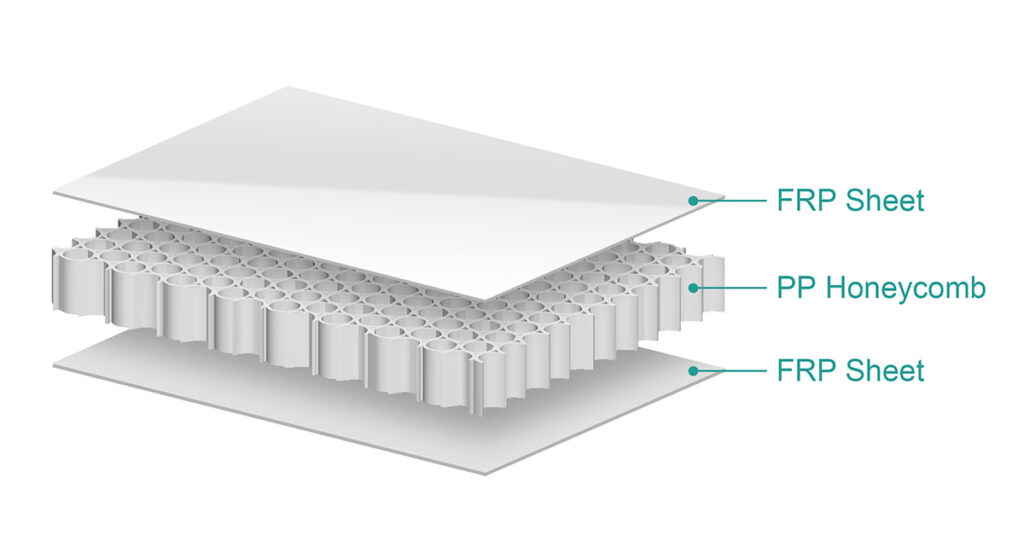
- Polypropylene (PP) is a general-purpose plastic with stable properties, excellent chemical resistance, high purity, low water absorption and good electrical insulation. In addition, PP material is not only light in weight, but also suitable for welding.

- Plywood is a material made of multi-layer thin wood veneers. The two adjacent layers of veneers are vertically stacked with each other. It is combined with fiberglass sheets to make stronger composite panels.
Type 0f FRP Sheets
TOPOLO offers two types of thermoset FRP sheets for use as sandwich panel skins: chopped strand mat FRP and woven roving FRP. These exhibit different performance characteristics based on their distinct fiberglass structures.

Chopped Strand Mat FRP Sheet
- Chopped glass fiber strands are randomly arranged and evenly distributed, making them easy to impregnate with resin; FRP sheets of this type typically exhibit superior surface smoothness.

Woven Roving FRP Sheet
- The fiberglass yarns are interwoven at 90-degree angles, which enhances the ultimate tensile and flexural strengths of the FRP layer; however, due to this unique weave structure, the weave pattern often telegraphs onto the FRP surface.
Different Surface Treatments are Available
Utilizing gel-coat finishes or embossing processes, FRP composite panels offer a range of surface options—including stone, wood, and fabric textures, in addition to standard high-gloss and matte finishes—and can be customized to meet specific customer requirements.



How TOPOLO Builds High-Quality FRP Sandwich Panels
TOPOLO strictly controls the key stages of FRP sandwich panel production to provide customers with stable, reliable, and consistently high-quality sandwich panel products.

Weather-Resistant FRP Sheets
- High-quality FRP sheets with excellent weather resistance, corrosion resistance, and surface stability are selected for production. They are suitable for long-term outdoor use and demanding operating environments.

High-Performance Adhesives
- High-performance adhesives are selected to maintain reliable bonding strength across a wide temperature range. They resist embrittlement in low-temperature environments and maintain stable bonding performance under high temperatures.

Integrated Vacuum High-Pressure Lamination
- The FRP skins and core material are fully and evenly bonded through an integrated vacuum high-pressure lamination process. This helps reduce internal voids and interface defects, effectively minimizing common sandwich panel problems such as blistering and delamination.

CNC Precision Machining
- CNC machining equipment is used for cutting, drilling, milling, and dimensional processing of sandwich panels, ensuring high machining accuracy and consistent product dimensions.
Application of FRP Sandwich Panels
FRP sandwich panels are making a significant mark across various industries, offering lightweight, durable, and easy-to-process material solutions for sectors such as commercial vehicles, recreational vehicles (RVs), construction, and industrial equipment.
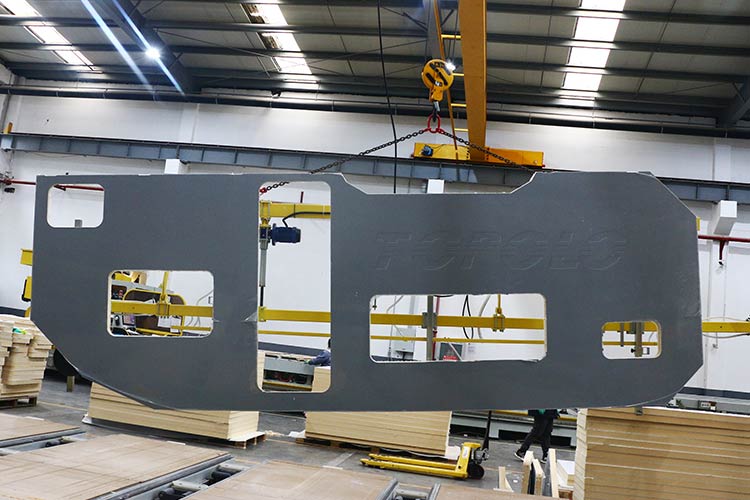
- Fiberglass sandwich panels are used as sidewall panels, floors, and roofs for motorhomes, caravans, and campers,etc.

- The box of dry trucks and refrigerated trucks used to transport various snacks, meat, fruits, vegetables, cold drinks, etc.

- Mobile homes, mobile toilets, sentry boxes, bedroom door panels, wall panels, ceilings, etc.

- Fiberglass sandwich panels can be used for flat sports products such as pickleball rackets, basketball backboards, table tennis tables, etc.

- Fiberglass sandwich panels are used in floors, ceilings, and internal partitions of high-speed trains, buses, and subways.

- The deck of the ship and the internal wall panels, floors, partitions and weather panels.